


If your company aims to help people and make a difference or you believe that there are some employees within your organisation who would benefit from adding some new skills to their repertoire, a certification in health and social care is a great place to start.
Having the knowledge required, in order to provide care and basic medical attention is necessary, if your team members have an aspiration to achieve a rewarding career in health and social care.
Regardless of the segment of the care sector that your organisation fits into, this course will fit your employees’ needs.
As this course is offered entirely over the internet, this will allow your staff the freedom to study from anywhere and at any time that suits them. By studying these 19 modules, they’ll quickly be able to grasp what it takes to become capable in the field of health and social care.
What’s Covered in the Course?
The Health and Social Care Certificate course was created to give students all they require to step into this thriving industry.
Upon completing the course, you can decide if the role of a carer is right for you, or whether you want to seek out further educational opportunities in the carer field. The carer course covers the following:
The laws and regulations that are applicable to those who work in healthcare;
What a carer is and how they influence the economy;
An introduction to the important publication: ‘The National Carers Strategy’;
How to properly handle heavy loads manually, in order to avoid injury;
Who vulnerable adults are and the tools available, in order to help keep them safe;
How infections spread and what your team members can do, in order to avoid them;
The proper way in which to perform CPR and how this invaluable tool can help save lives;
How to operate a defibrillator, when someone is going into cardiac arrest;
The countless mental illnesses that an individual can suffer from and how the mental health field is rapidly evolving;
The regulations in place, when it comes to carers working with children.
What are the Benefits of the Course?
When completing this course, there are a range of benefits that employees can look forward to, including:
Teaching their colleagues how to provide basic medical care in an emergency situation;
The ability to study from any place, 24/7;
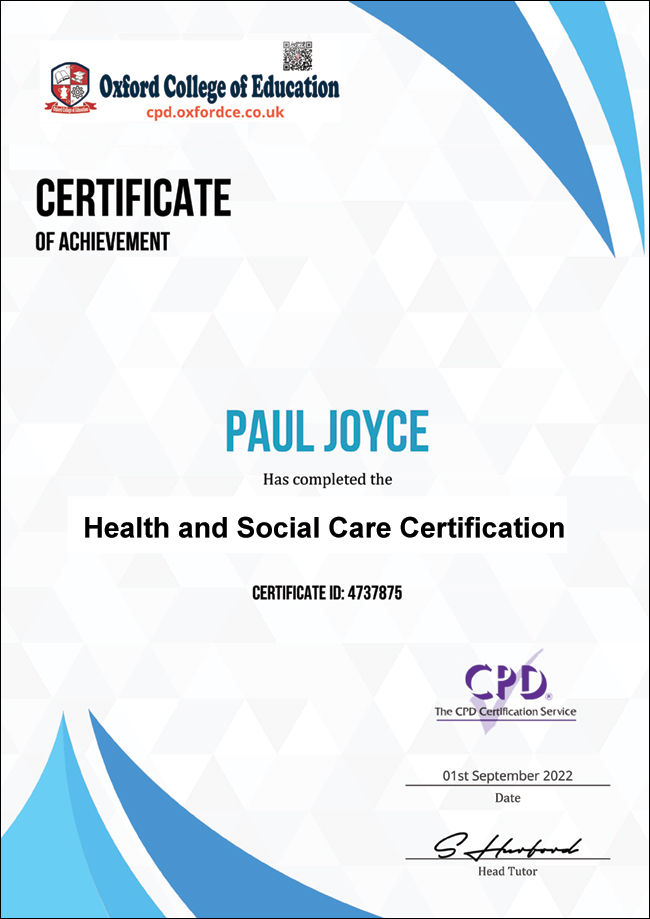
Upon completion of the course, your employee will receive a fully-accredited certificate, and this adds extra credibility to your business;
Online support offered with the course.
Course Modules/Lessons:
The legislations involved in the provision of care (some specific to manual handling)
The regulatory authorities applicable to different regions
The variety of manual handling aids used to move people safely
What’s involved in risk assessments
Discover key legislations in place to actively support carers in the community
The definition of a carer
The impact carers have on the economy
What the National Carers Strategy is (and why it is unlikely to change priorities)
Learn how manual handling aids can lower the amount of force required to just 2% of the load weight
The safest methods to transport any heavy and bulky objects with minimum risk of injury
What every employer does to minimise harm from manual handling activities
What the law lays down for employers and employees to comply with for a safe workplace
About the impact of the Care Act 2014 on Care Workers
The definitions of vulnerable adults and what can constitute abuse
The significance of the No Secrets Document
The 6 key principles of safeguarding vulnerable adults
How fires start and spread
The six classifications of fires
The different types of firefighting equipment and extinguishers used for each classification of fire
Handling oxygen safely in care environments, including with home care service users
Discover the five critical areas for maximum infection control measures
The legal requirements for working with clinical sharps
The organisation responsible for issuing the quality standard guidelines that all healthcare workers must adhere to
The risks of poor infection control
Learn about the types of first aid certification for first aiders
The core legislations surrounding health and safety, including why care workers are partially exempt from the Working Time Regulations
Who is responsible for what
The reporting procedures to follow should any accidents occur
Discover the two mnemonics that’ll help you remember how to save someone’s life
What the acronym F.A.S.T. means and why it’s crucial to remember
How to perform crucial lifesaving CPR
What a defibrillator does and why you can’t delay using one when someone is experiencing a cardiac arrest
Learn about the national legislations that all food business operators are required to abide by
How Environmental Health Officers enforce the legislations at a local level
The danger zone temperatures food should be kept out of and the methods used to do that
Food safety considerations for all carers whether you work in home support services or a residential care home – you need to know how to protect clients from harm
Discover the 16 pivotal pieces of information contained in Safety Data Sheets;
How the EU Market works to safeguard public health from hazardous chemicals;
The new GHS Hazard Pictograms;
Everything you need to know about the COSHH 2002 Regulations;
Discover all the steps required for an effective communication process;
The barriers that will hinder any attempt to deliver a message to someone;
What active listening is and how you can apply it to all areas of your life;
What is involved in verbal and non-verbal communication;
Learn the fundamentals of the Mental Capacity Act 2005 (MCA) (England and Wales), The MCA NI 2016 (Northern Ireland) and the Adults with Incapacity Act 2000 (Scotland);
Know what the Depravation of Liberty is and why it is important for carers to understand;
Master the five principles underpinning the Code of Practice for The Mental Capacity Actnow exactly why on on Human Rightsat the power to do so themselves, dless of hte and the Adults with Incapacity Act;
Gain clarity on exactly what ‘lacking capacity’ means and how capacity is assessed;
Learn the three groups of mental disorders;
The wide variety of mental illnesses within each group;
Gain clarity about what exactly is meant by mental health;
The changing face of mental health in the NHS, and the targets in place for improving wellbeing;
Learn what is covered by the Equality Act 2010 (including a 2013 repeal);
The difference between the Equality Act 2010 and the Public Sector Equality Duty;
Why equality and diversity are significant in the care profession;
Good practice for promoting equality;
Learn how to identify and respond to numerous health conditions, both minor and life-threatening
The key legislations involved in First Aid
The acronyms used to remember the order to carry out a Primary Assessment and a Secondary Assessment
The risks associated with certain injuries that can cause a person’s health to deteriorate rapidly – and what to do if that happens
Learn the 7 things people with Dementia want carers to know
Why your support extends beyond people with dementia
The different types of dementia there are
How to support parents after they have been diagnosed with early onset dementia
Discover the purpose behind the Data Protection Act 2018
About the ICO and its duties to enforce the Data Protection Act
What the core principles of the Data Protection Act are
Your responsibility to safeguard service-users’ confidential data
Learn what disclosures are and how to deal with children who confide in you
How the UK child protection system works
The most significant legislation protecting children from harm
The various types of abuse posing a risk to children
Uncover the real risks that display screen equipment presents
The 9 Principles of Prevention from the EC Framework Directive 89/391/EEC
The background of the Health and Safety (Display Screen Equipment) Regulations 1992 and how it protects DSE users from harm
The definition of a DSE user